Are you tired of seeing AI everywhere? Generative Artificial Intelligence (Gen AI) has made its way into graphic design, art, writing, television, movies, ads, and so much more. It has even infected the most-used search engine in the world, Google, which is why, for researching this article, I used the no-AI version of DuckDuckGo. I would prefer a search engine company without gen AI period, but I guess that is too much to ask. Do I think Google will prioritize pro-AI articles and bury anti-AI ones? To be honest, I am not sure. And that is enough to make me use a different search engine for now.
I am not a Gen AI expert. I understand it. I have my bachelor’s degree in Information Sciences and Technology. I am a tech nerd. However, there are many more highly educated experts out there already screaming their warnings from the mountain tops in many articles. They have explained it over and over again, but the ones who are listening already know the gospel. I am not here to repeat, verbatim, everything these experts have said. What I am hoping to do is make an ELI5 (explain it like I’m five) version.
I was reading a comment section yesterday where people could not understand how the water used to cool data centers could not be reused/recycled. I also see many people parroting things like “you use a phone” or “you are on Facebook,” so you are already contributing to the data center problem. Your use of social media apps or the internet does require data centers, but why is it that they are suddenly on the rise in a massive way even though smartphones have been around since 2002 (via the BlackBerry) and widely used by 2007 (via the iPhone)? Let’s dive a bit deeper and try to find the truth and explain it in a simplified and understandable way.
1. It’s Ruining the Environment
This is the most common complaint you will hear and validly so. The data centers used to power AI guzzle down water, produce high levels of heat and noise, and suck up all of the energy regular households need.
AI’s water usage primarily stems from the need to produce energy and provide chilled water to cool the high-performance computing hardware inside data centers. For every kilowatt-hour of energy a data center consumes, it is estimated to require two liters of water for cooling.1 This intense demand affects both local ecosystems and communities. This happens through a domino effect of the rapid expansion of AI facilities, which draws heavily on local water resources. In certain regions, data centers are exacerbating resource scarcity by extracting massive amounts of water even during drought conditions.2 Since these data centers physically exist within and rely upon local environments, their massive water extraction has both direct and indirect implications for biodiversity and can significantly disrupt surrounding ecosystems.
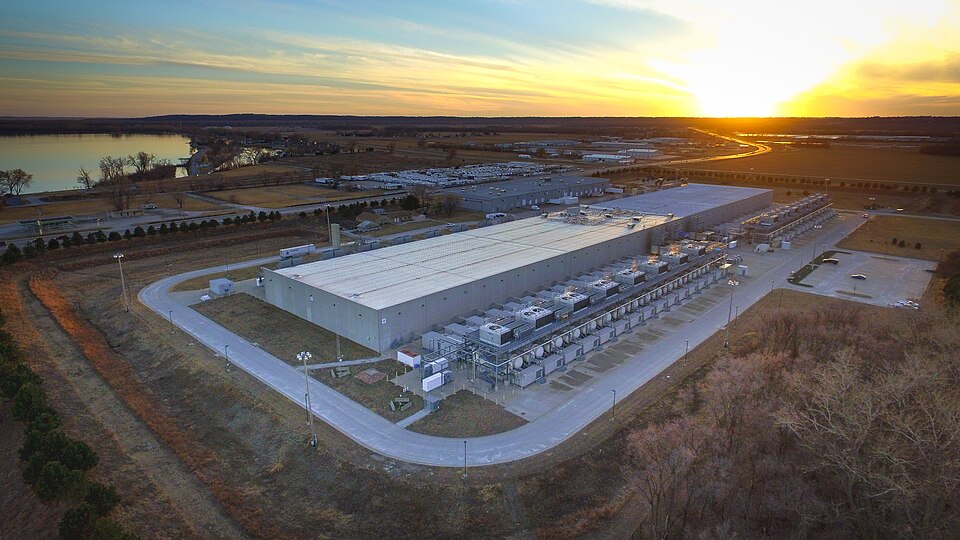
To illustrate the sheer scale of this issue, a study by the UN University estimates that by 2030, AI-related water consumption could equal the basic annual domestic water needs of 1.3 billion people. Additionally, the pursuit of “green” solutions can sometimes worsen the water problem; for example, switching to certain renewable energy sources to reduce carbon emissions can paradoxically cause a significant increase in water consumption and land use.
When you use AI on your phone or computer, the actual “thinking” happens in massive, warehouse-sized buildings called data centers. These buildings are packed with tens of thousands of highly powerful computers. These computers have to work incredibly hard. For example, asking ChatGPT a question takes about five times more electricity than a regular web search. Asking AI to create a single image takes over a thousand times more energy than a simple text task. Generating video takes even more.3
Just like your phone might get hot if you play a heavy video game, these giant computers get dangerously hot. To keep them from breaking, data centers use huge systems of chilled water to constantly cool the machines. Making the physical computer parts for AI requires mining for raw materials, which uses toxic chemicals. Furthermore, these massive data centers take up huge amounts of land. As the technology quickly advances, older computer parts are constantly thrown away, which is expected to create 2.5 million tonnes of electronic waste (e-waste) annually by 2030.4
tl;dr: AI is powered by giant, hot computers that require massive amounts of electricity to run and millions of gallons of local water to keep them from overheating. Most of this water evaporates.
2. It’s Making People Dumber
There have been many studies around the social, environmental, and economic impact of AI, but recently there was a groundbreaking study published by MIT that explores a phenomenon it terms “cognitive debt” and “metacognitive laziness,” which shows that heavily relying on AI tools can lead to a decline in independent thinking and cognitive skills over time.5
When users rely heavily on AI to generate answers or write essays, they bypass the intellectual effort required to internalize concepts. This leads to “metacognitive laziness” and “cognitive debt,” where users lose out on long-term skill development, independent problem-solving, and deep analytical reasoning. Also, unlike traditional search engines that require users to evaluate multiple sources, AI provides synthesized, singular responses. This can trap users in “echo chambers” that reinforce existing beliefs and limit their exposure to diverse or challenging perspectives.
As I’m sure many of us have seen, AI has the ability to generate highly credible, human-like text and “deepfake” media. This makes it a powerful tool for spreading misinformation, fake news, and propaganda. This can be maliciously used to manipulate public opinion, influence elections, and destabilize democratic institutions.
When researchers tracked people’s brains while they wrote essays, they found that those writing entirely on their own had highly active brains doing heavy mental lifting. Those using ChatGPT had much lower brain activity because the AI was doing the hard work for them.
Since the AI users’ brains weren’t fully engaged, they also didn’t actually absorb the information. In fact, 83% of the ChatGPT users couldn’t accurately quote a single sentence from the essay they had just finished writing. Meanwhile, the people who wrote the essays themselves had perfect memory of their work.
You have to think of your brain like a muscle here. If you constantly let AI do your thinking, your brain gets out of shape. The researchers call this “cognitive debt,” meaning if you skip the hard mental work now, your brain loses its ability to problem-solve and think critically when you actually need to do something on your own later.
tl;dr: AI makes tasks feel easier in the moment, but over time, relying on it makes your brain “lazy” and weakens your memory and independent thinking skills
3. It’s Taking Jobs
Many corporations are laying off employees in hopes they can be replaced by AI or because they already have. AI’s ability to automate both routine and non-routine cognitive tasks poses a significant threat to the labor market. AI is expected to displace many workers, particularly in roles that require easily replicable skills, and endangered professions span from manufacturing to law and journalism. While AI will generate new roles in tech and prompt engineering, a massive portion of the global workforce will require extensive retraining to remain employable.

When looking for those new roles, minorities may find themselves at a disadvantage as AI models are trained on massive datasets scraped from the internet, and they frequently inherit and amplify historical human biases. For example, AI has been shown to reproduce racist and sexist stereotypes, such as misclassifying minorities in law enforcement tools or discriminating against female applicants in recruitment software.6
A recent report from Goldman Sachs estimates around 300 million jobs could be affected by generative AI, meaning 18% of work globally could be automated. The report also predicts two-thirds of jobs in the U.S. and Europe are exposed to some degree of AI automation and around a quarter of all jobs could be performed by AI entirely.7
tl;dr: AI will mostly automate specific routine duties rather than wiping out entire professions at once. However, the shift is still massive, with estimates suggesting AI could replace the equivalent of 300 million full-time jobs globally.
4. It’s Ruining the Internet
Have you ever heard of the dead internet theory? Without going too deep into it, it hypothesizes that the internet is, or will eventually be, bots talking to each other with very little or no human content. If you dig a little deeper than that, people believe that the vast majority of online content and social media posts are created and manipulated by artificial intelligence to control populations, whether that be to buy something or vote a certain way. I’m not confirming or denying that as I haven’t done enough research into it; however, it doesn’t feel too far off, does it?
My main gripe for this point is that the internet is being taken over by AI slop. Posts are written with ChatGPT, images are created with Gemini, videos are created with Midjourney, etc. All small business flyers now look the same because they are made with Gen AI. Fake posts are everywhere on platforms like Facebook; fake videos can be found on TikTok and YouTube. It feels inescapable. I don’t know if it’s because I’ve read so much or I’ve seen so much, but it’s recognizable to me right away, and I instantly recoil when I see it.

When I try to point this out in local groups, the small business owner immediately gets defensive. Fair enough. The next time I went about it a different way and asked the business owner why her baked goods looked so strange and unappetizing. She explained it was “illustrated.” I replied that I would rather see her actual food and not something AI generates. When her co-owner started to get defensive and asked how much I would charge to make a flyer, I said I would do it for free. I never got another reply. I saw another AI flyer the next day from the same business.
5. It’s Forced Into Everything
There is such a long list for this point that I don’t think I could even put it all here. From AI overviews on search engines to video games and software programs, AI is being forced into everything. This really became apparent when I needed to shop for a new laptop recently. Every single laptop I came across had some sort of AI crap on it. The majority of them now have a Copilot button if you’re shopping for a Windows device, which includes over 50% of all users. No, I don’t want a Copilot button. I don’t want Copilot in my Word program. I don’t need Gen AI to “enhance” anything I am doing or have been doing for my entire life.
While this may sound like a completely personal rant, and it partially is, the forcing of AI into every little thing is increasing the prices of many things across the board. Memory is more expensive, which means computers and phones are as well. Putting AI into all of these things means it needs more power to run, which will also increase your electric bill, or you may completely lose access to power altogether, as is the case with the city of Lake Tahoe, whose electrical supplier is cutting them off in order to supply more energy to nearby data centers.
Not All AI is Created Equal
The complaints leveraged in this article, and almost everywhere, are towards generative artificial intelligence, not artificial intelligence (AI). Traditional AI has been around since the 1950s when it was first introduced by Alan Turing. Traditional AI is built to analyze, predict, or sort data that already exists. It follows patterns to make a decision or a guess, but it doesn’t create anything brand new. Traditional AI is used in many applications today, such as Netflix recommending a movie you might like, Spotify predicting your next favorite song, or your phone filtering spam emails.
Gen AI takes it a step further. Instead of just identifying or sorting things, it uses what it has learned to generate completely new content from scratch. While traditional AI looks at a thousand pictures of cats and says, “Yes, that is a cat,” Gen AI looks at a thousand pictures of cats and says, “Here is a brand-new drawing of a cat wearing a top hat that has never existed before.” A simple way to look at this is that traditional AI recognizes and decides, while Gen AI imagines and creates.
Comparing traditional AI to Gen AI is like comparing a fuel-efficient moped to a heavy-duty semi-truck. While both run on digital tracks inside data centers, the power density and computational muscle required by Gen AI place a vastly heavier load on our energy grids and water resources. A single query to a Gen AI model (like asking a chatbot to write a response) consumes about 10 times more electricity than a traditional AI task, such as a standard Google Search recommendation or a spam filter check. The server racks inside data centers holding advanced Gen AI chips (like NVIDIA’s massive GPU clusters) can require 7 to 8 times more energy than standard cloud computing or traditional AI server racks.
The overall message here is that this is not a technology panic. There is nothing wrong with advancement. There is nothing wrong with traditional AI that has been around for decades. There is something wrong with Gen AI and what it is being used for, what it is doing to our environment, our world, and our minds.
SOURCES:
- Zewe, Adam (2025, January 17). Explained: Generative AI’s environmental impact. Massachusetts Institute of Technology. https://news.mit.edu/2025/explained-generative-ai-environmental-impact-0117 ↩︎
- United Nations (2026, June 4). AI’s environmental costs threaten water, land and climate. United Nations (UN). https://news.un.org/en/story/2026/06/1167658 ↩︎
- Schirn, Alexander (2025, August 15). The Sustainability Trade-Offs of Generative AI Technology. American National Standards Institute. https://blog.ansi.org/ansi/sustainability-trade-offs-of-generative-ai/ ↩︎
- Moravec, Vaclav & Gavurova, Beata & Kovac, Viliam. (2025) Environmental footprint of GenAI – Changing technological future or planet climate?. Journal of Innovation & Knowledge, 10(3). https://www.sciencedirect.com/science/article/pii/S2444569X25000411 ↩︎
- Kosmyna, Nataliya & Hauptmann, Eugene & Yuan, Ye Tong & Situ, Jessica & Liao, Xian-Hao & Beresnitzky, Ashly Vivian & Braunstein, Iris & Maes, Pattie. (2025) Your Brain on ChatGPT: Accumulation of Cognitive Debt when Using an AI Assistant for Essay Writing Task. Massachusetts Institute of Technology. https://arxiv.org/abs/2506.08872 ↩︎
- Wach, K. & Duong, C. D. & Ejdys, J., Kazlauskaitė, R. & Korzynski, P. & Mazurek, G. & Paliszkiewicz, J. & Ziemba, E. (2023). The dark side of generative artificial intelligence: A critical analysis of controversies and risks of ChatGPT. Entrepreneurial Business and Economics Review, 11(2), 7-30. https://eber.uek.krakow.pl/eber/article/view/2113 ↩︎
- Goldman Sachs. (2023, April 5). Generative AI could raise global GDP by 7%. Goldman Sachs. https://www.goldmansachs.com/insights/articles/generative-ai-could-raise-global-gdp-by-7-percent.html ↩︎

Kat is a stinky little goblin who lives in the swamps of Florida. It is so hot here. Please send ice cream and tater tots.